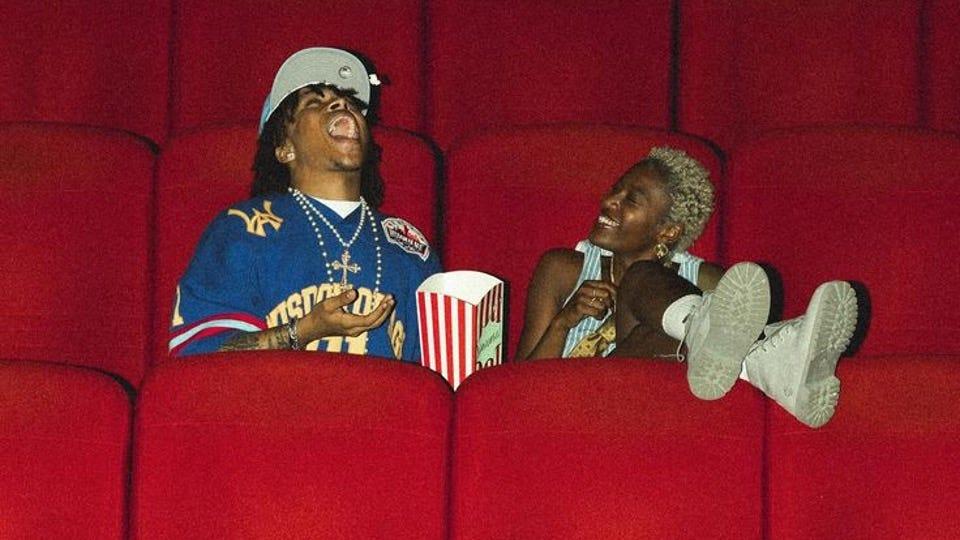
I Love Boosters, Boots Riley, and the Battle of Black Art at the Box Office
Despite their impact, nearly all culturally specific, Black-directed films are produced with budgets below $40 million, but are still expected to compete with…
Xero Gravity · June 19, 2026 · 6 min
Despite their impact, nearly all culturally specific, Black-directed films are produced with budgets below $40 million, but are still expected to compete with tentpole blockbusters that can cost over $250 million to make. To Hollywood, ambitious Black art is never expected to succeed to the level that demands sequels and spin-offs after opening weekend alone. So, listen- we can’t demand more original Black stories without investing in them when they arrive. Without audience support, studios have very little incentive to take a risk on unconventional Black art. Now more than ever; it’s time to crack open our wallets and endorse.
I Love Boosters and Is God Is are released as theaters continue their battle against shortened theatrical windows, the ongoing threat of streaming, and the undeniable political and cultural censorship by entertainment mergers with no opposition to upholding fascism. Even if Hollywood felt like it, promoting righteous intersectional stories like these are guaranteed to garner more disdain than enthusiasm (Have you seen the Sinners comment sections?). The conditions for success have become even more restrictive, so it’s up to us, really.
As Hollywood continues to push sequels, franchises, and algorithm-friendly IP, Boots Riley’s I Love Boosters is a diamond in the rough; an original concept with a playful, politically righteous vision. Riley remixes the public hysteria of shoplifting (or “boosting”, if you’re with it) pointed at people of color in a systemic cover-up for capitalism’s prescribed poverty. “Don’t get me wrong…” Riley claps back via X, “movies, songs, culture - it’s all propaganda - and is persuasive, but only works in tandem with material conditions. People aren’t homeless cause of culture. How we understand homelessness and whether we can do anything about it- that is created by culture.”
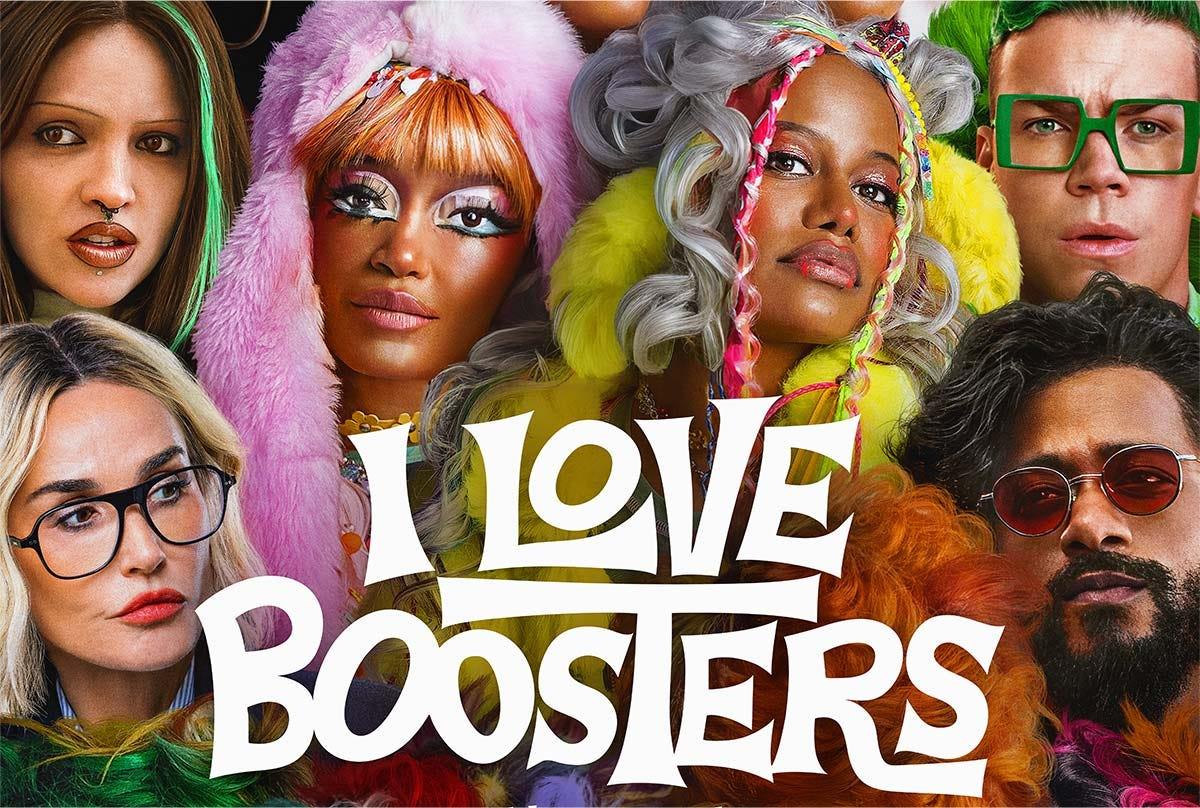
The film follows Keke Palmer, Naomi Ackie, and Taylour Paige as the baddest, most eclectic gang of retail boosters in a vendetta against a crooked fashion mogul (Demi Moore). The idea is to make fashion accessible to their community while bringing home a buck. The fashion industry has been guilty of stealing trends from Black and brown communities to sell as their own - might as well steal a little back. Bonus points for pissing in the coffee pot in the process. Together, nobody boosts better than these chicks, and the industry is feeling the heat of their “fashion forward philanthropy.”
Similarly to the fictional stories he captures, Riley’s work was never meant to fit into commercial-friendly categories. Like his feature debut Sorry to Bother You, and limited series I’m a Virgo, his anti-capitalist comedies stand on the mirepoix of afrofuturism; sci-fi realism, culture, and Black liberation by way of joy. The bubblegum flavor of storytelling trojan horses itself as a popcorn flick and encourages viewers to think critically about why it’s right to stand up against sources of oppression. We call them “instant cult classics” mostly because art like this never had a chance to survive on brand recognition. They survive because audiences decide they are worth leaving home for - if they get the memo in time.
When you stand at the right angle, the anti-corporate baseline of Riley’s I Love Boosters directly mirrors the despondent reality of ethical filmmaking and movie-going. It’s a love letter to every marginalized creative who has ever had their labors of love stolen or suppressed. If you want something done right, you do it yourself. Joining the battle of the box office is one of the few direct ways we can influence what gets made. Boots Riley wants you to know that, because marketing isn’t obligated to. The official campaign to grab audience attention didn’t include influencer pop-up activations, or much paid promotion at all; just the power of accessibility and the magic of good ol’ word of mouth via Boots’ personal social media. Organizing free screenings on college campuses, personally thanking fans for their support, posting calls to action on what to do when Regal cancels your screening, and of course, teasing the folks who stay home and wait for a streaming release.
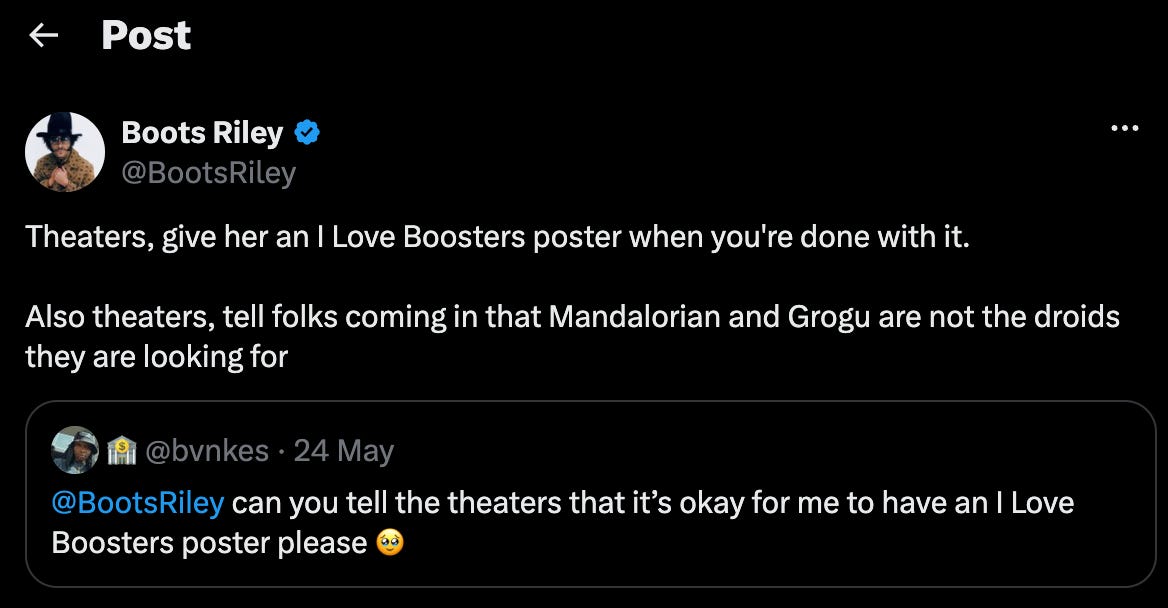
This campaign sparked almost as much joy and righteousness as the movie… almost. After earning $3.72 million opening weekend against The Mandalorian and Grogu and Obsession, Riley confirmed via socials that “every day of the weekend, movies box office drops a certain percentage. I Love Boosters had the least percentage drop of all the movies this weekend, by a fair amount. This tells me the word of mouth is working.” Barely a marketing plan, but a movement that your average $100 million marketing budget couldn’t touch. And that’s on community.
It’s been too much fun engaging with Riley’s campaign online; almost like a running meme. But the fact that Riley is pigeonholed into using social media to keep his art visible is nothing short of troubling. The commercial reality of Black art at the box office shows us why moviegoing still matters, especially for creatives and consumers of color. Not only as entertainment, but as a cultural act of resistance; a form of cultural voting. Our presence is a protest on screen, in theater seats, and in post-watch discussions too.
Again, those who enjoy unconventional Black art hold the responsibility to show up for righteousness in all forms, including public attention to the vulnerability and rage our communities have been systemically groomed to restrain for decades. We’re breaking generational curses over here.
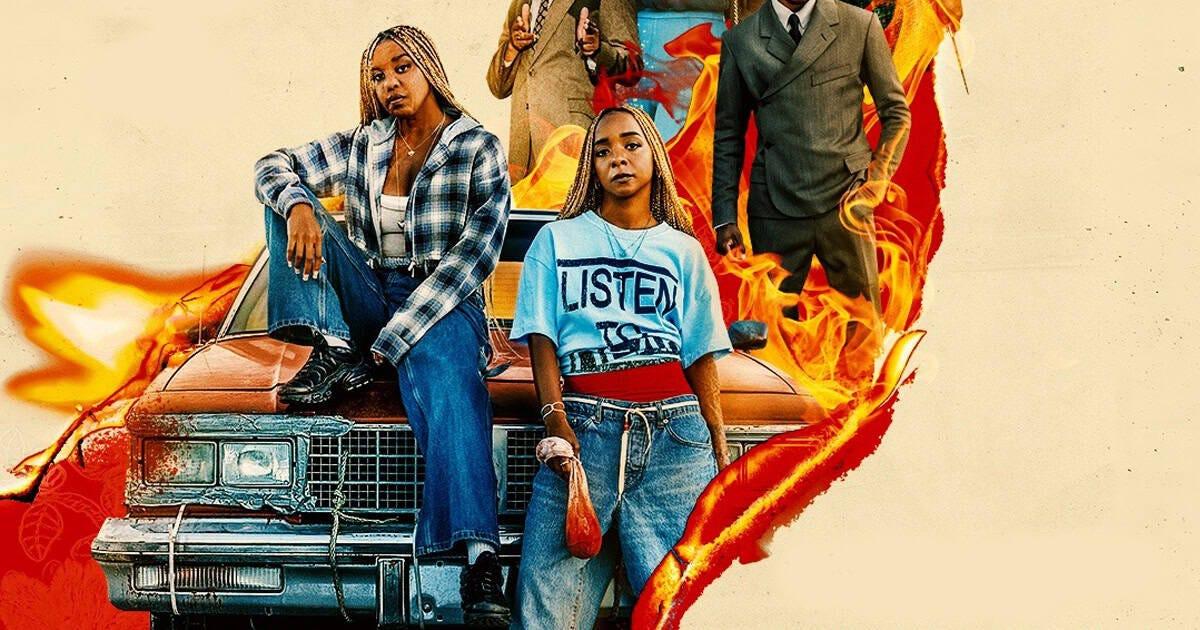
One week before the release of I Love Boosters, Aleshea Harris’ feature debut Is God Is released, kissing its teeth towards misogyny’s impact on the beauty and respectability politics of Black women. The criminally underseen, visually exquisite gothic thriller from the playwright-turned-filmmaker is exactly what many Black femme critics believe Hollywood has a reason to fear. For that reason alone, it exists as a powerful case for audience investment.
The cousin of the spaghetti western shows an absurdist version of the liberation Black women are owed when we refuse the social descriptors that place us into the false frames of our gender and race. It doesn’t owe you comfort, it gifts you catharsis for pain that you might not have realized you weren’t letting yourself feel. Kara Young and Mallori Johnson become twin sisters in this story. They are survivors of the foster care system, and before that, survivors of their father’s domestic violence, after an attempt to burn them and their mother (Vivica A. Fox) alive.
Anaia (Mallori Johnson) is left with burn scars over her face and body, leaving her to move through life believing she deserves less, while Racine (Kara Young) carries the aggression for them both, unable to part with the burden of misogynoir that uprooted their lives before they had a chance to become themselves. The twins are expected to shrink themselves for the comfort of society to avoid being pinned as two descriptors commonly tagged to Black women; ugly and angry. The twins were under the assumption that their mother had succumbed to her burn injuries, but when she shows proof of life and contacts them as adults, those societal guidelines crumble for better and for worse. Their mother, who they refer to as “God” tasks them to find their father, and “make him dead.” What this means to us, is a confrontation to the burdens of misogynoir, beauty, and violence that hover over the emotions and bodies of Black women everywhere.
Harris’ screenplay revives Black women’s permission to be ugly and angry in a way that Hollywood willingly fails to uncover. In reality, and on screen, owning these attributes situationally will lead us to shame and judgement, or the offensive hypothesis that our emotions lack validity, as it’s just another race trait. Is God Is has the power to activate Black women, and consider who we are, uninterrupted. Respeciability politics has no real estate here, only liberation.
The plight of Black art at the box office offers a case for why moviegoing still matters, especially for and by marginalized communities.
Every ticket purchased for a film like I Love Boosters or Is God Is sends a message to studio distributors that the audience for virtuous storytelling remains willing to pay. The only thing that trumps corporate desire to flick away the voices that criticize their practice, is the money they make. How prominent would diverse storylines be in the Marvel cinematic universe today, if not for the billion dollar success of Black Panther in 2018? Protecting opportunities for radical, healing, and unconventional art requires participating in one of the oldest rituals of entertainment culture- buying a ticket. Cop one, and join the movement.
More like this
A Nation You Can Carry
Haiti returned to the World Cup after 52 years - without a home, and now without the right to wear its own history. So it brought the one thing no committee…
Jonathan Giles · 5 min
Megan Thee Stallion: The Consequences of Being A Sexual Black Woman
After the death of her parents, grandparents, and the shooting by Tory Lanez, Megan Thee Stallion was facing one battle after another. For many Black women,…
Habiba Katsha · 5 min
The Ghost of Madison Square Garden's Past
A 1999 rematch, two franchises that became their cities, and the uncomfortable truth about loving a team that never wins.
Jonathan Giles · 6 min